Laser Skin Resurfacing FAQs

Awards

Clients

%
Client Satisfaction

Cosmetic Procedures
Commonly Asked Questions
Considering laser skin resurfacing? Find answers to common questions about the procedure, recovery, costs, side effects, and the results that can be achieved.
Is laser skin resurfacing safe for all skin types?
Laser skin resurfacing can be performed safely on most skin types when appropriate laser technology and treatment parameters are selected. A thorough skin evaluation helps minimise risks such as pigmentation changes and supports safer, more predictable outcomes.
Who should perform laser skin resurfacing procedures?
Laser skin resurfacing should be performed by a qualified plastic surgeon or dermatologist with specialised training in laser treatments. Proper expertise helps ensure accurate treatment planning, safer procedures, and optimal aesthetic results.
Can laser skin resurfacing be combined with other treatments?
Yes, laser skin resurfacing is frequently combined with treatments such as PRP, chemical peels, microneedling, and injectables. Combination approaches can improve skin texture, tone, collagen production, and overall rejuvenation outcomes.
How long does recovery take after laser skin resurfacing?
Recovery after laser skin resurfacing typically takes 3 to 14 days, depending on the type of laser used and the depth of treatment. While the skin generally heals within 1 to 2 weeks, mild redness may persist for several weeks to 3 months following more intensive resurfacing procedures. For more details, speak to Dr Manoj Khanna.
What is the laser skin resurfacing cost?
Laser skin resurfacing costs typically range from ₹5,000 to ₹50,000 per session, depending on the laser technology used, treatment area, and severity of the skin concern. In Kolkata, most treatments generally cost between ₹6,000 and ₹15,000 per session, while advanced ablative laser procedures may cost more. Speak to Dr Manoj Khanna today for cost-related queries.
What are the benefits of laser skin resurfacing?
Laser skin resurfacing helps reduce fine lines, wrinkles, acne scars, enlarged pores, pigmentation, sun damage, and uneven skin texture. The treatment also stimulates collagen production, resulting in smoother, firmer, and healthier-looking skin.
Is laser skin resurfacing painful?
Laser skin resurfacing is generally well tolerated. Topical anaesthesia is commonly applied before treatment to improve comfort. Mild heat, tingling, or stinging sensations may occur during the procedure and usually resolve shortly afterwards.
How many sessions of laser skin resurfacing are needed for optimal results?
Most laser skin resurfacing treatment plans require 1 to 6 sessions, depending on the laser technology used and the severity of concerns such as acne scars, wrinkles, or pigmentation. Sessions are typically spaced 4 to 6 weeks apart to allow proper healing and collagen remodelling.
Are the results of laser skin resurfacing permanent?
Improvements in skin texture, acne scars, and pigmentation can be long-lasting. However, natural ageing, sun exposure, and lifestyle factors continue to affect the skin, making periodic maintenance treatments beneficial for preserving results.
What to expect during the laser skin resurfacing treatment?
During laser skin resurfacing, controlled laser energy is delivered to targeted skin layers to remove damaged tissue and stimulate collagen production. Treatment duration typically ranges from 30 minutes to 2 hours, depending on the area treated.
Are there any side effects after laser skin resurfacing?
Common side effects include temporary redness, swelling, dryness, peeling, and increased skin sensitivity. These effects usually resolve within several days to a few weeks as the skin heals and regenerates.
How to maintain the results of laser skin resurfacing?
Long-term results can be maintained through consistent sun protection, proper skincare, adequate hydration, and avoidance of excessive UV exposure. Following post-treatment recommendations provided by Dr Manoj Khanna can further support lasting improvements.
Can laser skin resurfacing treat acne scars?
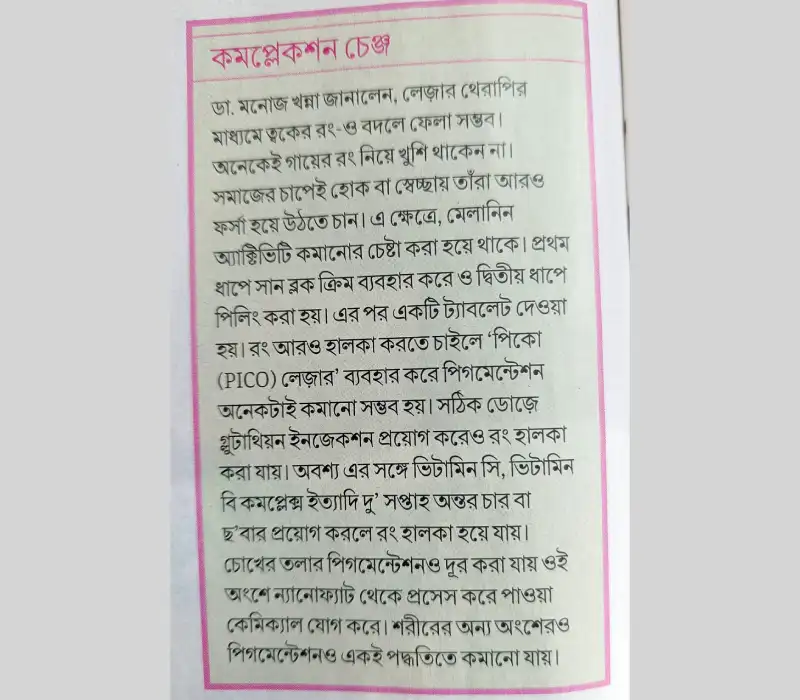
Yes, laser skin resurfacing is widely used to improve acne scars. The treatment stimulates collagen remodelling beneath the skin, helping reduce scar depth, smooth uneven texture, and improve overall skin appearance over time.
When will results become visible after laser skin resurfacing?
Initial improvements may become noticeable within 1 to 2 weeks after treatment. As collagen production increases, skin texture and quality continue improving, with final results typically developing over 3 to 6 months.
How is candidacy determined for laser skin resurfacing?
Candidacy is determined by assessing skin type, medical history, treatment goals, and the condition being treated. Dr Manoj Khanna evaluates these factors to recommend the most appropriate laser resurfacing approach.


Still Have Questions About Laser Skin Resurfacing?
Every individual's skin concerns, treatment goals, and recovery expectations are different. A detailed consultation can provide clarity on treatment suitability, expected results, recovery timelines, and costs. Dr Manoj Khanna carefully evaluates each case to recommend the most appropriate laser skin resurfacing plan for safe, effective, and natural-looking outcomes.
Book a consultation today