
You’ve noticed it for a while now—the thinning at the crown, the receding hairline, or the extra hair left behind after every shower.
At some point, the question stops being “Is this normal?” and turns into “What can I actually do about it?”
That’s usually when people start researching a hair transplant, and almost immediately run into two confusing options: FUE and FUT. Both are proven procedures that promise natural-looking results, yet choosing between them feels difficult.
Dr Manoj Khanna specialises in hair transplant in Kolkata and has over 30 years of experience in the procedure. He also performs both FUE and FUT hair transplant procedures with expert precision. Over the years, he has completed more than 8000 cases, including 2000 cases of FUE.
This guide explains the real differences between FUE and FUT in simple terms, so you can understand which method fits your hair loss pattern, lifestyle, and expectations.
What Is the Difference Between FUE and FUT Hair Transplant Techniques?
The main difference between FUE (Follicular Unit Extraction) and FUT (Follicular Unit Transplantation) lies in how hair follicles are taken from the donor area of the scalp. Both methods transplant healthy follicles into bald or thinning areas, but the surgical procedures differ.
Key differences explained clearly
Get to know the major differences between FUE and FUT hair transplants.
| Factor | FUE | FUT |
| Extraction method | Follicles are removed individually | A strip of scalp is removed |
| Donor area healing | Faster surface healing | Slightly longer healing |
| Scarring | Small dot scars | Thin linear scar |
| Head shaving | Required | Usually not required |
Understanding this difference helps patients avoid confusion during consultations.
Which Hair Transplant Has a Faster Recovery Time?
FUE usually allows a faster, more visible recovery because it does not involve stitches in the donor area. FUT requires sutures, which means slightly longer healing and aftercare.
Typical recovery comparison
Check out the recovery timelines of FUT and FUT hair transplant.
- FUE
- Scabs shed within 7–10 days
- Minimal post-operative discomfort
- Earlier return to the daily routine
- Scabs shed within 7–10 days
- FUT
- Sutures removed after 10–14 days
- Mild tightness during early healing
- Slight activity restrictions initially
- Sutures removed after 10–14 days
Recovery speed matters for patients with busy schedules.
Is FUE or FUT Better for Male Pattern Baldness?
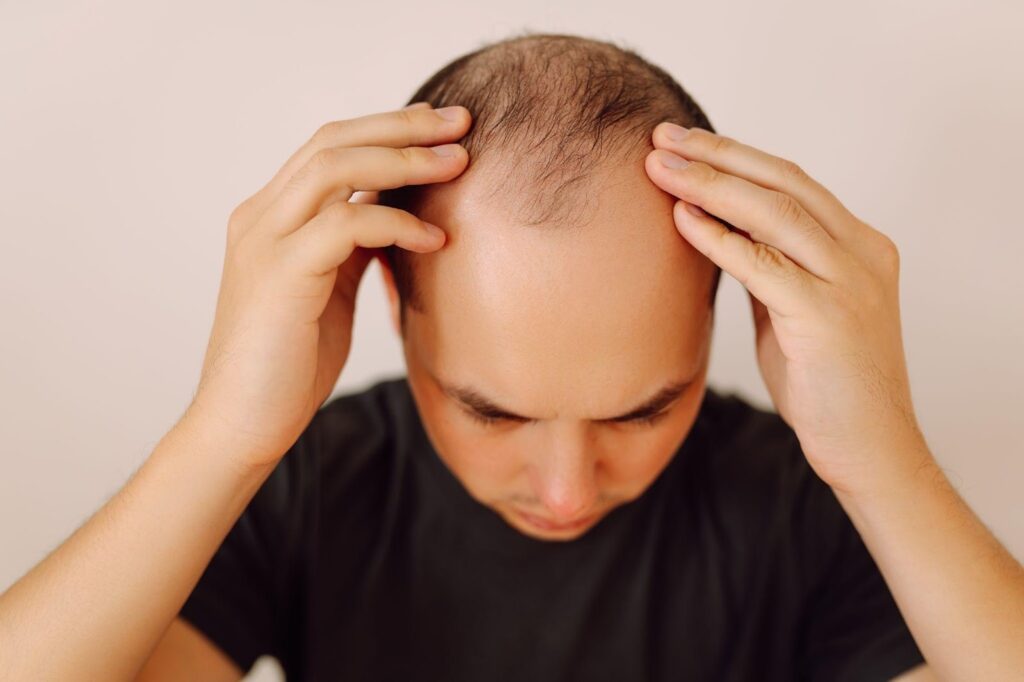
Both techniques effectively treat androgenetic alopecia or male pattern baldness when planned correctly. The right choice depends on the stage of hair loss and the strength of the donor hair.
How surgeons usually decide
Factors that determine the choice between FUE and FUT hair transplant are:
- FUT is preferred when
- Hair loss is advanced
- A large number of grafts is required
- Long-term density is the main goal
- Hair loss is advanced
- FUE is preferred when
- Hair loss is mild to moderate
- Hairline detailing is important
- Faster recovery is desired
- Hair loss is mild to moderate
A scalp examination is essential before deciding.
Does FUT Leave a Permanent Scar?
Yes, FUT involves removing a narrow strip of scalp to harvest follicles. This results in a thin linear scar in the donor area.
What patients should know
If you are concerned about FUT scars, keep the following in mind.
- The scar is permanent but usually thin
- Modern closure techniques reduce visibility
- Longer hairstyles typically conceal it
Scar visibility depends on hair length and personal preference.
Why Do People Who Prefer Short Hairstyles Choose FUE?
FUE avoids a long linear scar, making it suitable for short haircuts. The extraction marks heal as tiny dots that blend with the surrounding hair.
Why FUE suits short hairstyles
Reasons why FUE is suitable for short hairstyles are stated here.
- No visible linear scar
- Greater styling flexibility
- Easier donor area concealment
This is why many younger patients prefer FUE.
How Much Does a Hair Transplant Cost?
The cost of a hair transplant depends on graft count, technique, and the surgeon's experience.
Prices vary, but quality and safety should remain priorities.
Cost comparison overview
Here are the main determinants of hair transplant cost.
| Cost Aspect | FUE | FUT |
| Per-graft cost | Higher | Lower |
| Large sessions | More expensive | More economical |
| Long-term results | Comparable | Comparable |
Why Is FUT Often Recommended for Large Graft Sessions?
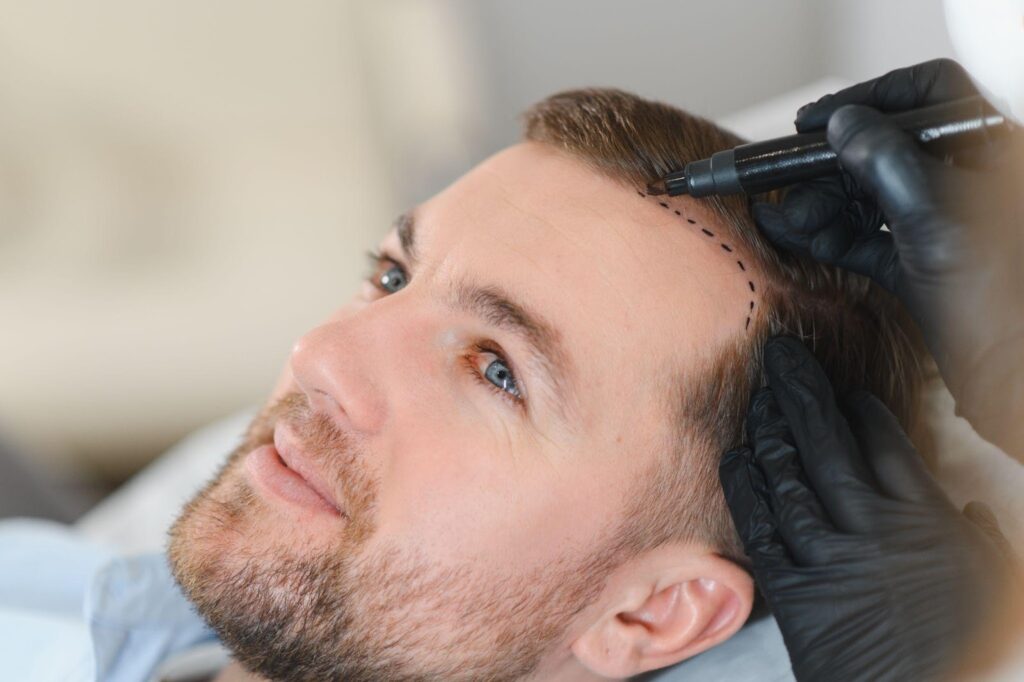
FUT allows surgeons to harvest a high number of follicles efficiently. This makes it suitable for extensive baldness.
Clinics often recommend FUT large graft sessions for advanced cases.
Advantages of FUT for large graft sessions
Look at the common benefits of FUT in terms of large graft sessions.
- Higher graft yield per sitting
- Reduced follicle damage risk
- Shorter overall surgery duration
For wide coverage needs, FUT remains effective.
How Do You Choose the Right Hair Transplant Surgeon?
When it comes to choosing the right hair transplant surgeon, surgical expertise has a greater impact than technique alone. Proper planning ensures natural density and hairline design.
Many patients search for the best hair transplant surgeon before proceeding.
What to evaluate
Keep this in mind when choosing a hair transplant surgeon.
- Experience with both FUE and FUT
- Honest, case-based advice
- Clear discussion of expectations
- Consistent patient outcomes
Choosing the right surgeon reduces long-term regret. Consult with Dr. Manoj Khanna, a surgeon specialising in hair transplant in Kolkata, for lasting results.
What Questions Should You Ask During Your Consultation?
A good consultation includes scalp analysis and long-term planning. Clear answers help patients feel confident.
Important questions to ask
Asking these questions will help ensure your peace of mind before undergoing the procedure.
- How many grafts will I need?
- Which technique suits my scalp condition?
- What growth timeline should I expect?
- How many similar cases have you handled?
Choosing Between FUE and FUT with Clarity
FUT involves removing a strip of scalp to harvest follicles, which can leave a thin linear scar. FUE extracts follicles individually, causing minimal scarring and faster healing.
The final choice depends on scalp condition, donor strength, and density goals. Understanding these differences makes decision-making easier.
Choosing a hair transplant in Kolkata should always be guided by medical evaluation, not trends. Dr. Manoj Khanna provides personalised consultations focused on scalp health, graft survival, and natural-looking results. Each treatment plan is personalised after careful assessment and honest discussion
Schedule a consultation with Dr. Manoj Khanna to choose the method that best suits your hair loss pattern.
People Also Ask
1. What is the main difference between FUE and FUT hair transplant?
The main difference between FUE and FUT lies in how hair follicles are extracted from the donor area. FUE removes follicles individually, while FUT removes a thin strip of scalp to collect follicles.
2. Which hair transplant method gives more natural results, FUE or FUT?
Both FUE and FUT can give equally natural results when performed correctly. Natural appearance depends more on the surgeon's skill than the technique used.
3. Is FUE more expensive than FUT?
Yes, FUE is generally more expensive than FUT. This is because FUE is more time-intensive and requires meticulous individual extraction.
4. Does FUT hair transplant leave a permanent scar?
Yes, FUT leaves a thin linear scar in the donor area. The scar is permanent but usually remains hidden under longer hair.
5. How long does it take to recover after a FUE or FUT hair transplant?
Initial recovery usually takes 7–14 days for both procedures. FUE generally heals faster than FUT due to the absence of stitches.
6. Which hair transplant method is better for advanced baldness?
FUT is often preferred for advanced baldness. It allows harvesting a higher number of grafts efficiently.
7. Can FUE and FUT both be done in one session?
Yes, FUE and FUT can be combined in selected cases. This approach is usually used when very high graft numbers are required.
8. Are hair transplant results permanent or do they fall again?
Hair transplant results are generally permanent. The transplanted follicles are resistant to hair loss hormones.
9. How do you know which hair transplant method is right for you?
The right method depends on your scalp condition, donor strength, and lifestyle. A detailed consultation with a qualified surgeon is essential.