The surgery is done, the compression vest is on, and suddenly every small sensation in your chest starts feeling like a clue you need to decode. A little tightness, a bit of swelling, maybe some bruising—and your mind instantly wonders, “Is this normal?”
Most men who undergo gynecomastia surgery become hyper-aware of their recovery process during the first few weeks. The reality is that recovery doesn’t happen overnight, and it doesn’t unfold the same way every single day. Understanding this timeline can make recovery far less stressful, because when you know what to expect, you stop worrying about normal healing changes.
As per Dr Manoj Khanna, a cosmetic surgeon specialising in gynecomastia treatment in Kolkata, understanding the recovery journey is just as important as understanding the procedure itself.
Let’s walk through what most patients experience during Week 1, Week 2, and Week 4 after surgery.
Recovery timeline at a glance (Week 1 vs Week 2 vs Week 4)
Recovery after gynecomastia surgery usually moves through a few phases during the first month. Each phase brings small improvements that gradually lead to the final result.
During Week 1, your body focuses on healing and protecting the surgical area. Swelling, mild soreness, and tightness are common as tissues begin to repair themselves.
By Week 2, the recovery process starts becoming more noticeable. Bruising fades, swelling begins to reduce, and normal movements feel easier.
By Week 4, many patients begin to see a much flatter chest contour, and daily activities feel far more comfortable again.
Week 1 — What you’ll feel and what to do (Days 1–7)
The first week after surgery is mainly about allowing your body to begin the healing process while protecting the surgical area from strain. During this time, your chest will likely feel different—tight, supported, and slightly swollen.
What’s normal
Most patients expect severe pain after surgery, but in reality, the sensation is usually more of a tight or sore feeling across the chest rather than sharp pain. This tightness occurs because the tissues are adjusting after the removal of excess glandular tissue and fat.
Swelling and bruising after gynecomastia surgery are also common during the first week. The chest may appear slightly swollen or uneven initially, but this is simply the body’s natural healing response.
Pain after gynecomastia surgery is generally manageable with medication prescribed by the surgeon, and most patients notice that the discomfort reduces significantly within the first week.
Compression garment

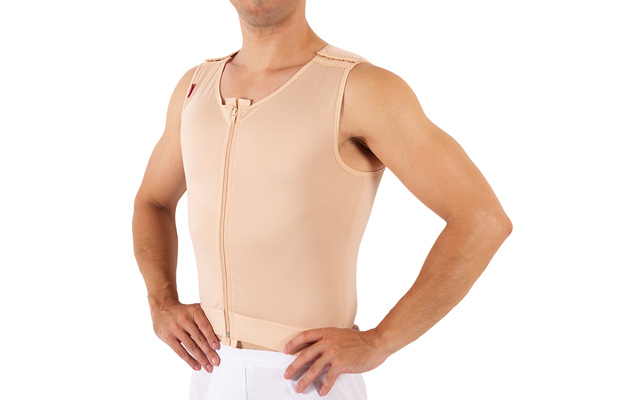
The compression garment you wear after surgery plays a major role in your recovery. Although it may feel unusual at first, this vest supports the healing tissues and helps shape the chest as swelling decreases.
Most surgeons recommend wearing the compression garment for about 20–22 hours each day, removing it only for showering or cleaning. The garment should feel snug and supportive but should never cause discomfort or restrict breathing.
Sleeping position and movement limitations
Sleeping position becomes important during the first week of recovery. Patients are usually advised to sleep on their back with the upper body slightly elevated, which helps reduce swelling and prevents pressure on the chest.
During this time, it is also important to avoid lifting heavy objects, stretching the chest muscles, or raising the arms above shoulder level. These precautions protect the healing tissues and reduce the risk of complications.
Bathing and incision care
Once your surgeon allows you to shower, gentle cleaning of the incision area with mild soap and water is usually recommended. After showering, the incision area should be dried carefully without rubbing.
Patients should avoid soaking the surgical area in baths, swimming pools, or hot tubs until the incisions have healed properly. Keeping the area clean and dry helps prevent infection and supports smooth healing.
When most people can return to desk work
Many patients who have desk-based jobs are able to return to work within five to seven days, provided they avoid strenuous activity. However, individuals whose work involves heavy lifting or physical labour may need additional time before returning to their normal routine.
If you are considering gynecomastia treatment in Kolkata, reach out to Dr Manoj Khanna for expert guidance.
Week 2 — What changes (Days 8–14)
The second week of recovery is often when patients begin noticing clear improvements. Bruising fades significantly, swelling begins to settle, and everyday activities feel easier.
Swelling reduction
During the second week, the chest usually starts looking less swollen, and the new contour becomes more visible. However, it is common to experience mild firmness or slight unevenness as the tissues continue adjusting.
At this time, patients may notice sensations like numbness, tightness, or firmness under the skin. These changes are typically temporary and part of the recovery process.
Walking, light activity, and daily routine
By the second week, most patients can comfortably resume light daily activities. Walking is usually encouraged because it improves circulation and supports healing.
Normal household activities and short outings are generally safe, as long as they do not involve strenuous effort.
When driving is typically safe
Driving is usually possible during the second week, once patients feel comfortable moving their arms and are no longer taking strong pain medications.
Before driving, it is important to ensure that steering, braking, and sudden movements can be performed comfortably without causing strain on the chest.
What to avoid (Gym, heavy lifting, chest workouts)
Although recovery is progressing well by this stage, patients should still avoid strenuous exercise. Activities such as weightlifting, push-ups, or chest workouts can strain healing tissues and delay recovery.
Patients undergoing gynecomastia treatment are usually advised to wait until their surgeon confirms it is safe to gradually resume exercise.
Week 4 — The big milestone (Days 22–30)

By the fourth week, many patients begin to feel a noticeable sense of progress. The chest typically appears flatter, swelling has reduced significantly, and daily activities feel much easier.
How your chest typically looks
At this stage, most of the initial swelling has subsided, allowing the chest contour to appear more natural and defined. Although minor swelling may remain beneath the skin, the difference compared to the early recovery days is usually quite visible.
This stage often represents an important milestone as patients begin seeing the results they were hoping for.
When workouts usually restart
Light cardio activities such as walking or gentle cycling may be allowed around the fourth week. However, chest exercises and heavy lifting should still be introduced gradually.
Starting with light activity and slowly increasing intensity helps prevent strain on the healing tissues.
Scar care
Around this stage, patients may begin scar care treatments, such as silicone gels or scar creams, as recommended by their surgeon. Proper scar care helps improve healing and reduces the visibility of incision marks over time.
The Final Result Is Worth the Wait
Recovering from gynecomastia surgery is a gradual process that unfolds week by week as the body heals and adjusts to its new shape. While the first few weeks may bring swelling, tightness, and temporary changes, these are all part of the natural recovery journey.
With proper care, patience, and guidance from an experienced surgeon, the results become clearer with time. If you are considering gynecomastia treatment in Kolkata, consulting an experienced specialist like Dr Manoj Khanna can help you understand the procedure.
Book a consultation today.
People Also Ask
- How long does gynecomastia surgery recovery take?
Most patients recover within 4 to 6 weeks, although final results continue to improve for several months.
- When can I go back to the office after surgery?
Desk work is usually possible within five to seven days, depending on how comfortable the patient feels.
- When can I go to the gym again?
Light exercise may begin around four weeks, while full chest workouts should wait until the surgeon gives clearance. - How long should the compression garment be worn?
Most patients wear the compression garment for three to four weeks, depending on their recovery progress.