A hair transplant can feel like the beginning of a new chapter. But once the procedure is over, the most common question patients ask is surprisingly simple: “When will I actually see my hair growing?”
Many patients worry when they notice shedding or slow growth in the early months, but these changes are usually part of the normal process. Knowing what happens at each stage helps you stay calm and confident during recovery.
If you are considering a hair transplant, choosing an experienced surgeon is equally important as understanding the timeline. Dr Manoj Khanna, an expert in hair transplant in India, has over 30 years of experience and has performed more than 8000 procedures. These include 2000 cases of FUE. He has helped thousands of patients regain natural hair density and confidence.
Let’s explore what really happens after a hair transplant.
2 weeks after hair transplant: What changes you’ll notice

By the two-week mark, the scalp has already passed the most delicate stage of healing.
Scabs/crusts falling off — What’s normal and what’s not
During the first 10–14 days, small scabs form around the transplanted grafts. These scabs protect the follicles and gradually fall off with gentle washing.
Patients often notice scabs, redness, and shedding, which is considered a normal part of recovery.
In FUE procedures, these scabs tend to disappear quickly because the graft sites are tiny.
In FUT procedures, the recipient area heals similarly, but the donor site may remain slightly tight as the linear incision continues to heal.
Redness/itching/tightness — When it fades
Mild redness or itching around the transplanted area is common and usually fades within two to three weeks.
Patients who undergo FUE often experience faster visible healing because the extraction points are very small.
With FUT, redness in the transplant area fades similarly, but the donor scar at the back of the scalp may remain slightly sensitive for a longer period.
Early shedding begins
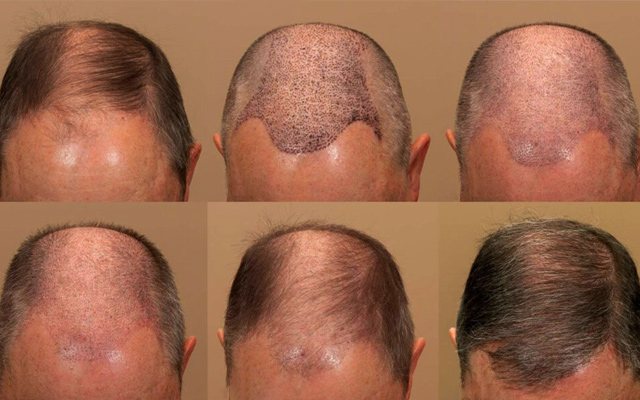
Around the second or third week, transplanted hair often begins to shed. This stage, known as the shedding phase, can be surprising if patients are not expecting it.
The shedding occurs because the follicles are resetting their growth cycle before producing new hair.
This phase occurs with both FUE and FUT techniques and does not indicate a failed transplant.
Washing, sleeping, hats/helmets, and sun exposure at this stage
Gentle hair washing is usually safe at this stage, and patients are typically advised to use a mild shampoo while avoiding aggressive scalp rubbing.
By the second week, most people can slowly return to their usual sleeping positions, provided they avoid excessive pressure on the transplanted area.
When it comes to headwear, loose caps are often considered safe after about two weeks because they do not press directly on the grafts. However, tighter headgear, such as helmets, should still be used cautiously.
Direct sunlight on the scalp should be avoided as much as possible, as the skin remains sensitive after the procedure. If going outdoors is necessary, wearing a loose cap and limiting prolonged sun exposure can help protect the healing scalp.
3 months after hair transplant: What to expect
The three-month stage often tests a patient’s patience because visible growth may still appear minimal.
“Nothing is growing” — is this normal at 3 months?
Many patients search online for answers to the question: Is no hair growth normal 3 months after a hair transplant?
The answer is yes. At this stage, follicles are transitioning from the resting phase into active growth, and visible hair is only beginning to emerge.
First visible sprouts: Texture, thinness, and patchiness
When growth begins, the new hairs often appear thin, soft, and uneven.
In FUE patients, the scalp often looks uniform because there is no linear donor scar.
In FUT patients, the transplanted area grows similarly, but the donor scar may still be visible if the hair is worn very short.
Over time, the hair gradually thickens and blends naturally with existing hair.
What you should avoid
During this stage, aggressive styling, harsh chemical treatments, and excessive heat should still be avoided.
Limiting smoking and alcohol also helps improve blood circulation to the scalp, supporting healthier growth.
6 months after hair transplant: Real progress starts showing
By the sixth month, most patients begin to feel genuinely excited about the results.
Density changes you can realistically expect by month 6
Around 50–60% of the final hair density may be visible by this stage. Patients usually notice a clear improvement in hairline definition and overall coverage.
Styling becomes easier, but it may still look “incomplete”
Although the hair is visibly growing, it may still appear slightly uneven because not all follicles grow at the same speed.
This stage is similar for both FUE and FUT patients, although those who underwent FUT may now find the donor scar easier to hide with surrounding hair growth.
When gym + heavy workouts are typically fine
Most patients can comfortably return to full exercise routines by this stage.
However, individuals who have undergone FUT may still want to avoid excessive scalp stretching until the donor scar fully matures.
12 months after hair transplant: Near-final results

The one-year mark is when the true transformation becomes visible.
What “final” means (maturation, thickness, natural direction)
By twelve months, transplanted hair typically becomes thicker, stronger, and more natural in appearance.
The follicles have completed their growth cycle and now act like normal hair.
This stage reflects the final results that patients look forward to.
If density still feels low: Common reasons + next steps
If density appears lower than expected, several factors could be responsible, including donor hair quality or ongoing thinning of natural hair.
In some cases, additional treatments or a second procedure may be recommended.
Long-term plan: Native hair thinning and maintenance
Even after successful transplantation, natural hair thinning may continue in untreated areas.
A long-term maintenance plan may include medications, PRP therapy, or lifestyle adjustments.
Patients considering a hair transplant in India often benefit from consulting Dr Manoj Khanna. The expert provides both surgical treatment and long-term hair management strategies.
Looking Ahead
Hair transplantation is a gradual process where patience plays an important role in achieving the best results. While early weeks may involve shedding and slow progress, the months that follow reveal steady growth and increasing density.
If you are considering a hair transplant in India, consulting an experienced specialist like Dr Manoj Khanna can help you understand the entire journey.
Book your appointment now.
People Also Ask
- How long does a hair transplant take to look natural?
Most patients see natural-looking results between 9 and 12 months.
- When does shock loss start, and when does regrowth begin?
Shock loss usually begins around 2–4 weeks, while regrowth typically starts between 3 and 4 months.
- When can I return to work after a hair transplant?
Many patients return to work within 3–5 days, depending on the type of work.
- When can I wear a cap or helmet again?
Loose caps are usually allowed after 10–14 days, but helmets should only be worn after the surgeon's approval.
- When can I colour my hair after a transplant?
Hair colouring is usually safe after 6–8 weeks, but always follow the surgeon’s advice.