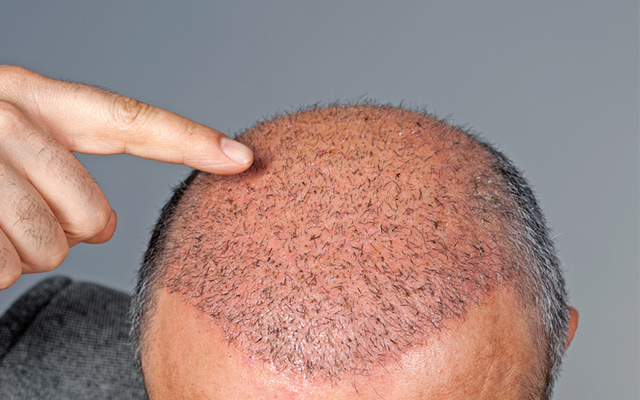
A hair transplant can restore thinning areas, redesign a receding hairline, and create fuller-looking coverage. However, one concern usually appears before the surgery: how long does a hair transplant last? The simple answer is that properly selected and transplanted donor hair may continue growing for many years. In suitable cases, the results can potentially last for decades.
Understanding hair transplant longevity myths vs facts helps patients set realistic expectations. Patients considering a hair transplant should therefore look beyond promises of “permanent hair” and understand how the procedure works over a lifetime.
H2- Is a Hair Transplant Really Permanent?

Potential candidates often question, “Do hair transplants last forever?” The individual follicles usually do, because they're taken from areas of the scalp that are genetically resistant to the hormone behind pattern baldness.
But is a hair transplant permanent in every sense of the word?
Not quite — your surrounding natural hair can keep thinning over the years, which is why some people mistakenly assume the transplant has "failed" when it's really just untreated hair loss continuing around it.
H2- How Does a Hair Transplant Work, and Why Does That Affect Longevity?
A hair transplant works by relocating healthy follicles from a donor zone to thinning or bald areas. Understanding where those follicles come from and how they're moved explains why some results last a lifetime while others fade unevenly.
H3- Why Donor Hair Is “Resistant” to Balding
Hair at the back and sides of the scalp is naturally less sensitive to dihydrotestosterone (DHT), the hormone responsible for androgenetic alopecia. When these follicles are relocated, they carry that resistance with them, continuing to grow in their new home largely unaffected by the balding process.
H3- FUE vs FUT — Does the Method Change How Long Results Last?
The honest answer to the lasting effects of FUE vs FUT is that neither technique makes the hair itself last longer. Both FUE and FUT hair transplant techniques move the very same DHT-resistant follicles — the real difference lies in extraction method, scarring pattern, and recovery time, not in how long the transplanted hair survives.
H2- What Is the Hair Transplant Growth Timeline?
The hair transplant results timeline follows a fairly predictable pattern, and knowing it in advance helps set realistic expectations.
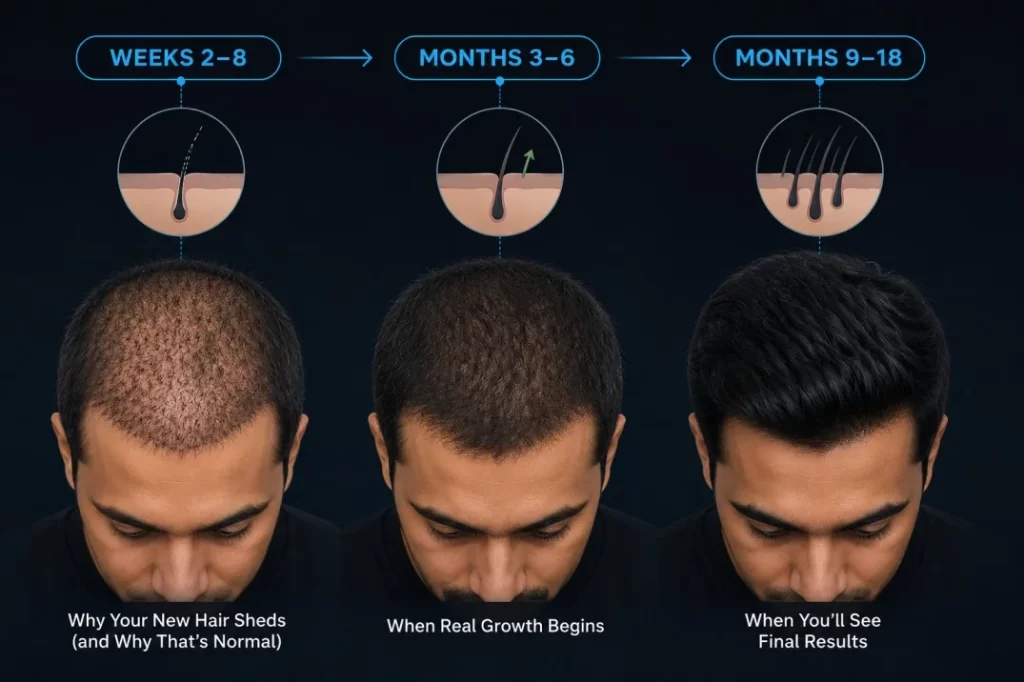
H3- Weeks 2–8: Why Your New Hair Sheds (and Why That's Normal)
Most transplanted hairs shed within the first two months after surgery. This is expected: the follicle survives beneath the skin while the visible hair shaft enters a resting phase after the trauma of transplantation.
H3- Months 3–6: When Real Growth Begins
New, finer hairs typically start emerging around month three, gradually thickening over the following months as follicles reactivate and cycle back into their normal growth phase.
H3- Months 9–18: When You’ll See Final Results
You may be wondering - how long does transplanted hair take to grow into the final look? Most patients see close to their full result between months nine and twelve, with texture and density continuing to refine for up to 18 months.
H2-Myth vs Fact: Common Misconceptions About Hair Transplant Longevity
Hair transplant myths circulate widely online, often overselling what the procedure can actually guarantee. Here are the ones worth clearing up.
H3- Myth 1 — “A Hair Transplant Lasts Forever, No Matter What”
Fact: Is a hair transplant permanent for the transplanted grafts? Yes. But your overall appearance still depends on donor supply and ongoing native hair loss elsewhere on the scalp.
H3- Myth 2 — “You’ll Never Lose Hair Again After a Transplant”
Fact: Non-transplanted hair remains vulnerable to genetic thinning, which is why many patients continue medical therapy after surgery.
H3- Myth 3 — “The Transplant Technique Determines How Long It Lasts”
Fact: Longevity comes from the biology of the donor hair, not from whether it was harvested via strip excision or individual extraction.
H3- Myth 4 — “Once It Grows, It Needs No Maintenance”
Fact: Scalp health, medication adherence, and periodic check-ups all help preserve the overall look, even though the grafts themselves need no special upkeep.
H2- What Actually Determines How Long Your Results Last?
Several variables shape the hair transplant success rate and how naturally your results age over time.
H3- Donor Area Quality and Supply
A thick, healthy donor zone gives your surgeon more usable grafts to work with, both for the initial procedure and for any future touch-up sessions.
H3- Surgeon Skill and Graft Placement
Precise angling, spacing, and depth during placement directly affect graft survival, which is central to hair transplant success rate and to achieving natural-looking density that holds up over the years.
H3- Aftercare and Post-Op Habits
Following post-op instructions closely, including sun protection, sleep positioning, and gentle washing, protects the grafts during the fragile early weeks when they're most vulnerable.
Ongoing Hair Loss in Non-Transplanted Areas
As native hair around the transplant isn't resistant to DHT, it can keep receding, gradually changing the overall hairline even though the transplanted zone itself stays intact.
Can You Extend the Life of Your Hair Transplant Results?
Yes. The transplanted grafts are already biologically stable, but supporting therapies can protect your remaining natural hair and keep the overall look balanced.
Medications (Finasteride, Minoxidil) and Their Role
Finasteride and minoxidil are commonly used to slow ongoing loss in non-transplanted areas, helping the whole scalp look more uniform as years pass.
Lifestyle and Scalp Care Tips
Alongside medication, many clinics recommend PRP treatments for hair growth and GFC treatments to strengthen hair roots as complementary, non-surgical options to support scalp health and hair density.
When a Touch-Up Procedure Might Be Needed
If natural hair loss progresses significantly years later, a touch-up session can restore balance using any remaining donor supply.
How Long Do Hair Transplants Actually Last — 10, 20, 30 Years Later?
Hair transplant lifespan is best measured in decades, not years. Patients who had transplants 10, 20, even 30 years ago typically still show visible growth in the transplanted zone, since those follicles remain DHT-resistant for life. What does change is the surrounding native hair. Hair transplant regrowth after years is well documented in long-term follow-ups, reinforcing that the core procedure holds up — it's ongoing hair loss elsewhere, not graft failure, that gradually alters the overall picture decades later.
Should You Trust “Permanent” Claims?
The grafts themselves are built to last, often for life, because they're taken from hair that's naturally resistant to balding. But "permanent" describes the transplanted follicles, not a blanket guarantee against all future hair loss.
Choosing an experienced surgeon, following aftercare closely, and staying ahead of ongoing thinning are what turn a good transplant into a genuinely lasting, natural-looking result.
Dr Manoj Khanna has over 30+ years of experience in performing successful hair transplant procedures. So, if you are looking forward to undergoing a hair transplant in India, he is the best choice.
Book a consultation today.
Call 098300 85506 for further details.
FAQs About Hair Transplant Longevity
Do hair transplants last forever?
The transplanted follicles typically do, since they're taken from balding-resistant zones of the scalp.
How long does it take to see full hair transplant results?
Most patients see their final density and texture between 9 and 18 months after surgery.
Does FUE or FUT last longer?
Neither — longevity depends on the biology of the donor hair, not the extraction technique used.
Can transplanted hair thin out over time?
It can appear thinner if too few grafts were placed relative to ongoing loss nearby, but the grafts themselves rarely fail due to DHT.
What is the average lifespan of a hair transplant?
Well-placed grafts commonly last a lifetime, though the overall look still depends on other scalp changes over time.
Will you need a second hair transplant later in life?
Some patients opt for a touch-up if natural hair loss continues around the originally transplanted area.
Does hair transplant hair grow like normal hair (can you cut/style it)?
Yes — transplanted hair grows, and can be cut, styled, and coloured just like the rest of your hair.
Can medication help transplanted hair last longer?
Finasteride and minoxidil mainly protect existing native hair, which supports the overall appearance around your transplant.
What happens to your natural (non-transplanted) hair after the surgery?
It continues to follow its own genetic pattern, which is why many patients pair surgery with ongoing hair loss treatment.