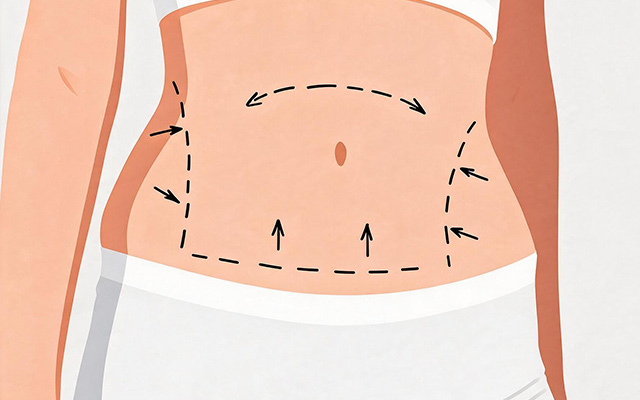
The 6-month liposuction journey begins with post-surgical swelling and gradually progresses toward a more defined, settled body shape. However, the contour visible immediately after surgery is not the final result.
Understanding the timeline for liposuction results can reduce unnecessary worry during the “in-between” stages. To understand what to expect after liposuction, learn more about the liposuction procedure and its aftercare.
What Happens Immediately After Liposuction Surgery?
What does the first 24–72 hours feel like?
During the first two to three days, soreness, tightness, fatigue, temporary numbness, and minor fluid leakage may occur. Many patients describe intense muscle soreness rather than sharp pain. Prescribed medicines, short walks, wound care, and rest usually help. The treated area may initially look fuller because of swelling. Follow every instruction regarding medicines, dressings, mobility, and warning signs.
Why is swelling and bruising normal at this stage?
A liposuction cannula moves through the fatty layer beneath the skin. The body responds to this controlled surgical trauma with inflammation, fluid retention, and bruising. Swelling can appear within 24–48 hours and may increase during the first one to two weeks. Compression is commonly used to support tissues and control oedema.
Breathlessness, chest pain, fever, foul-smelling drainage, one-sided leg swelling, or rapidly worsening pain and redness need urgent medical attention.
What Should You Expect in Weeks 1–3 (The Immediate Recovery Stage)?
When can you return to desk work?
Many people with desk-based roles return within several days to two weeks. Timing depends on the areas treated, anaesthesia, pain, commuting, and whether another operation was performed. Walking is encouraged early, but avoid pushing through dizziness, worsening pain, or exhaustion.
Why are compression garments important right now?
Patients often search “how long should one wear a compression garment after liposuction” because recommendations vary. Garments are commonly advised for several weeks, but the schedule must come from the surgeon. They may control swelling and support healing tissues; tighter is not always better.
Useful liposuction recovery tips include walking regularly, taking medicines as prescribed, keeping incisions clean, and attending post-surgical assessments.
What Changes Happen Between Weeks 3–6?
When does swelling start to subside?
When patients ask, “How long does liposuction swelling last?”, the honest answer is that improvement is gradual. A noticeable reduction often begins during the first weeks, but puffiness and firmness may remain. Liposuction swelling stages are not perfectly linear; activity, heat, travel, or salty meals may temporarily increase swelling.
By weeks three to six, bruising is usually lighter, and clothing may fit differently. Judging symmetry too early can still be misleading.
When can you resume exercise or heavy lifting?
Light walking begins early. Gym training, running, abdominal workouts, and heavy lifting require clearance. Many patients progressively resume exercise around four to six weeks, depending on the treated area and healing. Recovery may be slower after extensive or combined procedures.
What Does the 2–3 Month Mark Look Like?
Why do results start becoming more visible now?
In two to three months, much of the early swelling has settled. The area generally looks slimmer, while numbness and firmness keep improving. This is how the month-by-month healing stages of liposuction become easier to appreciate.
The doctor can provide a week-by-week guide for liposuction recovery. This is useful initially, but later changes are better assessed monthly.
What role does skin retraction play at this stage?
Liposuction removes fat; it does not remove significant loose skin. The skin must gradually adapt to the reduced volume beneath it. Good elasticity supports a smoother contour, while stretched or loose skin may retract less effectively.
Why Is the 6-Month Mark Considered the “Magic Window”?
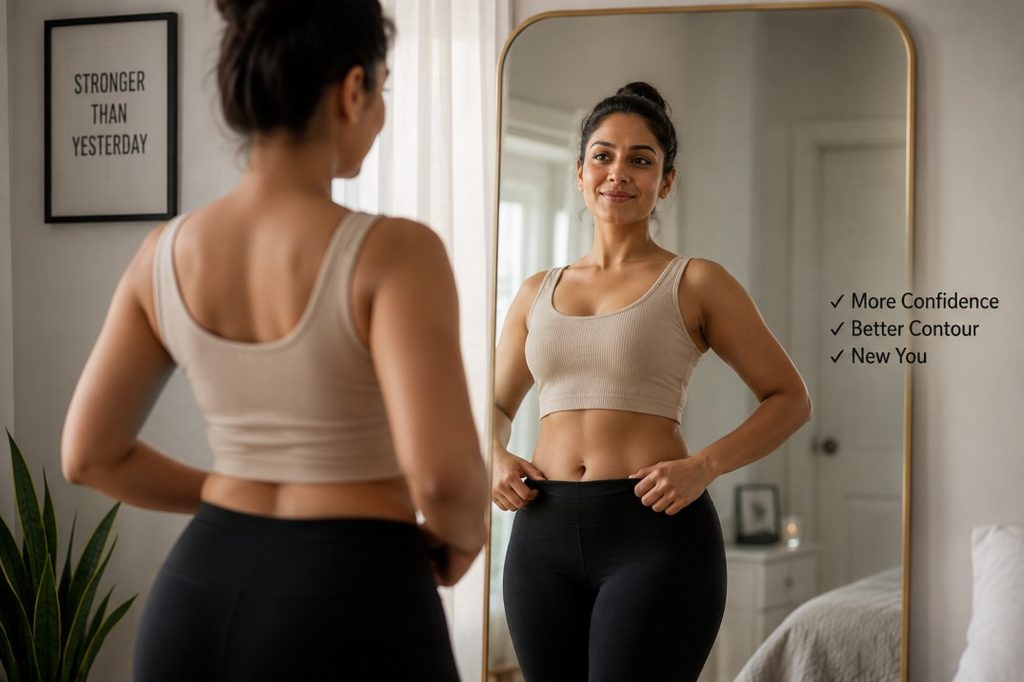
What does your final shape actually look like at 6 months?
For patients asking, “When will I see final results after liposuction?”, six months is a useful practical benchmark. By then, the contour is usually more stable, tissues feel softer, and definition is clearer.
You can view real liposuction before-and-after results to understand possible outcomes. These images should guide expectations, not promise an identical result.
How much of the swelling is truly gone by now?
Most visible swelling is generally gone by six months, although minor firmness or oedema may persist. Liposuction results before and after 6 months can look noticeably different, particularly after larger-volume or multi-area treatment.
Do Results Keep Changing After 6 Months (Up to a Year)?
What happens during months 7–9?
Changes are usually subtle. Minor swelling may resolve, scars may fade, sensation may improve, and firm patches may soften.
At this point, patients are more likely to notice refinement rather than dramatic reductions in size. Maintaining a stable weight also makes it easier to assess the lasting contour.
When is tissue remodeling fully complete?
Internal scar tissue and collagen continue reorganising after visible recovery. For some patients, the timeline of the final results of liposuction extends towards nine to twelve months. Larger procedures, complications, delayed healing, or combined surgery may lengthen this process.
The operating surgeon should assess any persistent hard area, increasing swelling, pain, or obvious contour irregularity instead of assuming that it is part of normal healing.
What Factors Influence How Fast—or Slow—Your Results Show?
Does the amount of fat removed matter?
More extensive treatment usually causes more swelling. Recovery may take longer when several areas are treated, or liposuction accompanies another procedure. For example, combining liposuction with a tummy tuck creates a different healing burden than limited liposuction alone.
General health, smoking, technique, and adherence to aftercare also matter. Treating larger body surfaces or performing multiple procedures together can increase surgical risks and affect the recovery process.
How do skin elasticity and age affect the timeline?
Age alone does not determine the outcome. Skin quality, genetics, stretching, weight changes, and sun exposure may matter more.
A proper examination helps determine whether liposuction alone can produce the desired contour or whether a procedure that removes excess skin may be more appropriate.
How Can You Support Faster, Better Healing?
What lifestyle habits speed up recovery?
Healing cannot be rushed, but it can be supported. Follow the activity plan, walk regularly, avoid nicotine, do not massage unless advised, and attend follow-ups. Avoid self-prescribed supplements or blood-thinning medicines.
Do not copy another patient’s recovery routine. The correct garment duration, massage schedule, exercise restrictions, and wound-care instructions depend on your procedure.
How important are diet, hydration, and sleep?
Protein-rich balanced meals support tissue repair. Fruits, vegetables, whole grains, and fluids help maintain energy and bowel regularity. Salty processed foods may worsen fluid retention, while alcohol can interfere with medication safety. Consistent sleep supports tissue repair after liposuction.
How Do You Maintain Your Results Long-Term?
Liposuction permanently removes selected fat cells, but remaining cells can enlarge with weight gain. Maintain a stable weight through balanced nutrition, regular exercise, sleep, and stress management.
Liposuction is body contouring—not a treatment for obesity or cellulite. Pregnancy, ageing, and major weight changes can also alter the result.
What’s the Realistic Timeline to Expect?
The liposuction recovery timeline includes early soreness and swelling, improving mobility during the first weeks, clearer contour around two to three months, and a more stable shape near six months. Refinement may continue for up to a year.
Consult Dr Manoj Khanna for expert-guided liposuction in Kolkata.
Call 098300 85506 for more information.
Commonly Asked Questions
How long does liposuction swelling last?
Major swelling improves over several weeks, but mild swelling may continue for three to six months or longer after extensive treatment.
When will you see your final liposuction results?
Most patients see a stable result around six months, although subtle refinement can continue for nine to twelve months.
How long do you need to wear a compression garment?
Many surgeons recommend wearing a compression garment several weeks after liposuction. Duration depends on the area, procedure extent, garment fit, and individual healing. Follow the schedule provided by your surgeon.
Can you speed up liposuction recovery?
You cannot bypass the healing period after liposuction. Support it through walking, rest, balanced meals, prescribed compression, avoiding nicotine, and attending follow-ups.
Is it normal to look worse before looking better?
Yes. Early swell/ing, bruising, asymmetry, and firmness can hide the contour. Sudden or severe worsening needs medical review.
Does liposuction remove cellulite?
No. Liposuction targets deeper fat and is not a dependable cellulite treatment. Dimpling may remain unchanged or become more noticeable.
How long before you can exercise after liposuction?
Walking usually starts early once you are done with the procedure. Demanding exercise often resumes around four to six weeks after surgical clearance.
Will your liposuction results last forever?
Removed fat cells do not return, but remaining cells can enlarge. Stable weight and healthy habits help protect the contour.
What is the difference between initial results and final results?
Initial results appear as early swelling decreases. Final results reflect fuller fluid resolution, skin adaptation, tissue softening, and internal remodelling.