Are you thinking about getting a hair transplant in India but feeling overwhelmed by all the options? With so many clinics and mixed reviews online, choosing the right place can feel daunting.
That’s why it helps to go with a surgeon whose experience speaks for itself. Dr Manoj Khanna, for example, brings over 30 years of expertise and more than 8,000 successful procedures, including 2,000 FUE cases. He combines the latest techniques with a commitment to natural, long-lasting results.
Read to know how you can choose the right clinic for your hair transplant.
Why Choosing Wisely Matters
Hair transplant surgery isn’t just cosmetic; it’s a permanent change to your appearance and confidence. According to research, outcomes vary widely based on surgeon skill, technique, and patient aftercare.
And let’s be real — botched hair transplants aren’t just unsightly, they can be emotionally tough too.
So here’s the ultimate checklist you actually need.
Hair Transplant Clinic Checklist — What to Evaluate
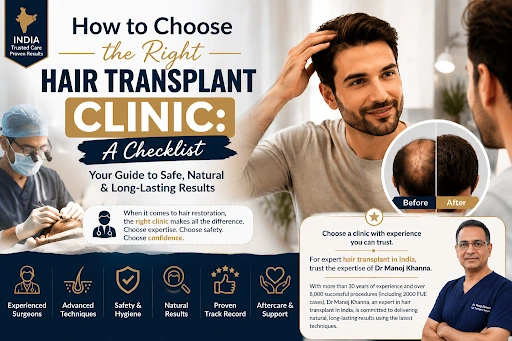
| Checklist Item | Why It Matters | What to Look For |
| Board‑Certified Surgeon | Ensures proper training & standards | Credentials, medical licences, membership in recognised associations |
| Technique Offered | Determines results & recovery time | FUE and FUT |
| Before‑and‑After Photos | Helps gauge real outcomes | High‑resolution, unedited photos of past patients |
| Patient Reviews & Testimonials | Real experiences matter | Third‑party reviews (Google) |
| Transparent Pricing | Prevents surprise bills | Clear cost breakdown: grafts, anaesthesia, followups |
| Clinic Hygiene & Safety | Safety first — every time | Clean OR, sterilisation measures, patient protocols |
| Consultation Quality | Great consultations reveal expertise | Detailed evaluation, honest expectations |
| Follow‑Up Care | Post‑op care affects outcomes | Scheduled check‑ups, instructions, support |
| Graft Count & Planner | Correct planning avoids over/under harvesting | Punch sizes, density mapping, donor assessment |
| Local Reputation | Local checks matter | Word‑of‑mouth, local surgeon networks |
1. Credentials & Experience: The Non‑Negotiables
Strategically, surgeon qualifications are the foundation of any successful hair transplant.
Don’t be dazzled by glossy ads — ask this:
🔹 Is your surgeon board‑certified or medically accredited?
🔹 Do they specialise in hair restoration — not just “general cosmetic procedures”?
🔹 How many years of real experience do they have?
Here’s a quick rule: a surgeon with decades of focused experience typically delivers more predictable results.
That’s exactly the kind of expertise you want on your side.
According to systematic reviews, surgeon experience strongly correlates with better graft survival and fewer complications.
2. Technique Matters: FUE vs FUT
Hair transplantation technology isn’t one‑size‑fits‑all.
Here’s a quick overview:
🔹 FUE (Follicular Unit Extraction)
- Minimally invasive
- Individual follicle extraction
- Quicker healing, less scarring
🔹 FUT (Follicular Unit Transplantation)
- Strip method
- Larger sessions per sitting
- Potentially more donor hair, but a linear scar
What science says: Multiple clinical trials show that FUE has become the globally preferred method due to reduced downtime and excellent graft survival rates. That said, “best” is subjective, depending on donor quality, hair characteristics, and personal preferences.
That’s why it’s not just whether a clinic offers these techniques — it’s how well they implement them.
3. Before‑and‑After Gallery: Reality Check
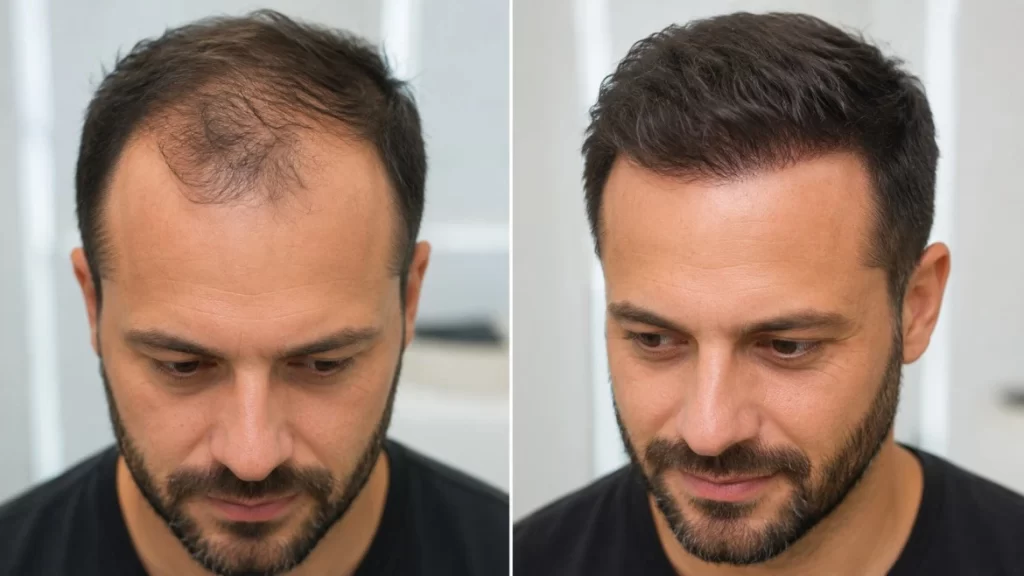
Photos matter, but context matters more.
When reviewing portfolios:
- Ask for multiple angles and different lighting
- Ensure photos are of actual patients, not stock images
- Check photos of similar hair types to yours
After all, your hairline expectations should be realistic.
4. Reviews & Social Proof: What Are Real People Saying?
Reviews can be misleading, but patterns matter.
Instead of scanning a few 5‑star testimonials, look for:
- Consistent feedback on communication, care, and results
- Constructive criticism — not just praise
- Verified reviews on Google
5. Pricing Transparency: No Surprises
Ask for a detailed quote upfront:
✅ Cost per graft
✅ Surgeon fees
✅ Consultation charges
✅ Follow‑up visits
✅ Medications & supplies
✅ Anaesthesia fees
Beware of clinics that quote a single, low price without details. It’s often an incomplete estimate.
6. Clinic Safety, Hygiene & Protocols
You wouldn’t want your face near a scalpel in a sloppy environment, right?
Check whether the clinic:
✔ Has a proper surgical suite
✔ Adheres to sterilisation protocols
✔ Uses single‑use tools where possible
✔ Has emergency protocols in place
Don’t hesitate to inspect the facility or ask direct questions.
7. Consultation Experience: Your Gut Should Agree With Your Brain
Great clinics treat consultations as two‑way conversations.
A strong consultation will:
- Assess your scalp and hair loss pattern
- Review medical history and medications
- Discuss realistic expectations
- Explain the pros/cons of different techniques
- Give you time to ask questions
If they rush you or dodge your concerns, walk away.
8. Aftercare & Follow‑Up: The Game Changer
Hair transplant recovery doesn’t end when you leave the clinic.
Ask:
- How soon will you see hair growth?
- Do you provide medications and instructions?
- When are the scheduled follow‑ups?
- What support is available if you have questions?
Studies in surgical recovery stress that systematic follow‑up care improves patient satisfaction and outcomes.
So choose a clinic that stays with you after the surgery, not just on the operation day.
9. Personalised Graft Planning: Science + Art
A decent surgeon isn’t just someone with a scalpel; they’re a planner.
Important aspects here:
🎯 Donor area strength: Not everyone has the same supply.
🎯 Density planning: Too sparse = patchy looks; too dense = unnatural.
🎯 Hairline design: Should complement your face, age, and genetics.
Good planning is where artistry meets science, backed by experience and honest assessment.
10. Local Reputation: Because You Might Want Support In Person
If you’re getting a hair transplant in India, local reputation matters. It means:
- Better access for follow‑ups
- Friends or colleagues who can share first‑hand feedback
- Less travel stress
Connect with local online forums, social circles, or even ask the clinic for references from nearby patients.
Regional peer impressions often reveal nuances you won’t find in ads.
Your Hair, Your Choice
Choosing a hair transplant clinic isn’t something you should rush. Think of it like choosing a travel route: the scenic option may take longer, but it gets you there better.
Here’s your core checklist recap:
✅ Verified surgeon credentials
✅ Advanced, well‑executed techniques
✅ Authentic before-and-after proof
✅ Transparent pricing
✅ Safe, clean environment
✅ Quality consultation
✅ Aftercare support
✅ Local credibility
And if you want a clinic that checks off every box — with decades of experience, thousands of happy patients, and genuine focus on natural results, you’ve got an option worth considering.
When it comes to hair transplant, experience truly counts, and so does personalised attention.
Make an Informed Choice
Choosing the right clinic affects not just how your hair grows back, but how you feel every time you look in the mirror.
Do your homework. Ask questions. Compare options and pick a team that treats you like a person, not a number.
Your hair deserves it, and so do you.
Looking for a clinic rooted in experience, natural results, and care that actually listens? Dr Manoj Khanna’s track record speaks for itself — three decades, thousands of cases, and results that look and feel real.
Book a consultation today.
People Also Ask
- What is the ideal age for a hair transplant?
Most candidates are in their late 20s to 50s, with stable hair loss patterns. Younger individuals may need careful evaluation to prevent further thinning post-procedure. - How long does a hair transplant procedure take? Sessions typically last 4–8 hours, depending on the number of grafts. Larger procedures may be split across multiple days for safety and comfort.
- Can lifestyle habits affect hair transplant success?
Yes, smoking, excessive alcohol, and poor nutrition can hinder healing. Maintaining a healthy lifestyle supports optimal graft survival and growth. - Are there non-surgical alternatives to hair transplants? Options like PRP therapy, laser therapy, and topical treatments exist. These may slow hair loss or stimulate growth, but don’t replace transplanted hair.
- How soon can you resume normal activities after surgery?
Light activities are usually safe after a few days. Strenuous exercise and swimming are generally postponed for 2–3 weeks to protect grafts. - Will transplanted hair require special care?
Gently washing and avoiding harsh chemicals is important during the first few weeks. After recovery, regular hair care routines are sufficient.